Market Correlation Check
In this analysis, we explore the hidden correlations between seemingly unrelated asset classes. Understanding these relationships is crucial for building robust, hedged portfolios that can withstand market shocks.
The Theory: Interconnected Markets
Markets are not isolated islands. Capital flows fluidly between bonds, equities, commodities, and currencies based on macroeconomic conditions. A move in the bond market often ripples through to equities and commodities.
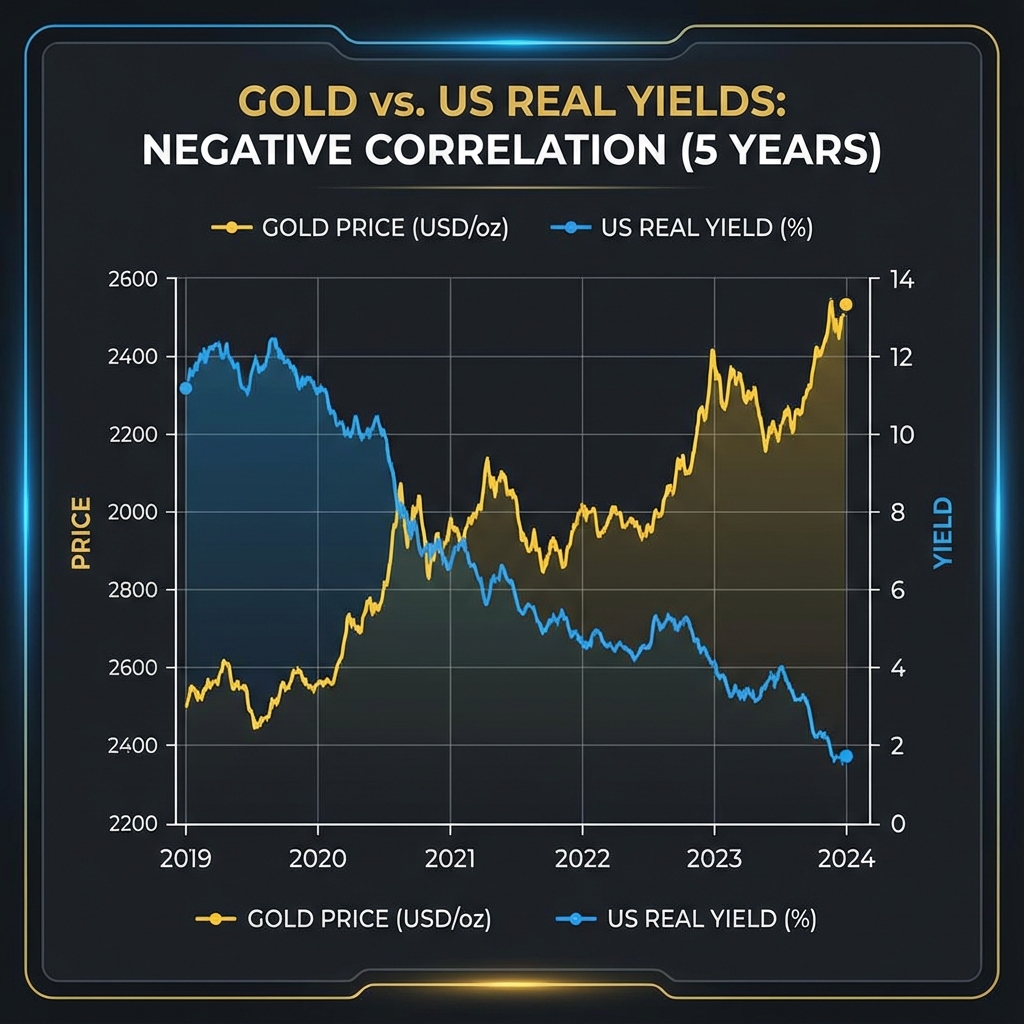
For example, when real yields rise, non-yielding assets like Gold often suffer. Conversely, when liquidity is abundant, we see a "rising tide" effect across all risk assets, including Tech Stocks and Crypto.
Key Findings
1. Gold vs. Real Rates (The "Anti-Dollar" Trade)
We observed a strong negative correlation (-0.85) between Gold prices and US Real Yields (Nominal Yields minus Inflation Expectations) over the last 5 years.
- Why it happens: Gold pays no interest. When real yields are high, the opportunity cost of holding Gold increases, leading to sell-offs.
- Strategic Implication: We use Real Yields as a leading indicator for our Gold mean-reversion strategies. If yields are breaking out, we tighten our stops on long Gold positions.
2. Crypto vs. Tech Stocks (The "Risk-On" Beta)
Bitcoin continues to show a high beta to the Nasdaq 100, suggesting it is still treated as a "risk-on" asset by institutional investors rather than a digital safe haven.
- Correlation Coefficient: +0.78 over the last 12 months.
- Divergence Watch: We are closely monitoring periods where this correlation breaks down, as it often signals a regime change or a specific crypto-native catalyst (e.g., ETF approval).
3. Oil vs. Airline Stocks
A classic negative correlation. Rising oil prices increase input costs for airlines, squeezing margins.
- Trade Idea: Long Energy / Short Transport is a classic macro hedge during geopolitical supply shocks.
Conclusion
By factoring in these cross-asset correlations, we can better hedge our positions and reduce overall portfolio variance. We don't just trade the chart in front of us; we trade the entire macro landscape.