Global Events Impact
How do social, political, and even weather events influence market volatility? In this report, we quantify the impact of "soft" data on "hard" price action.
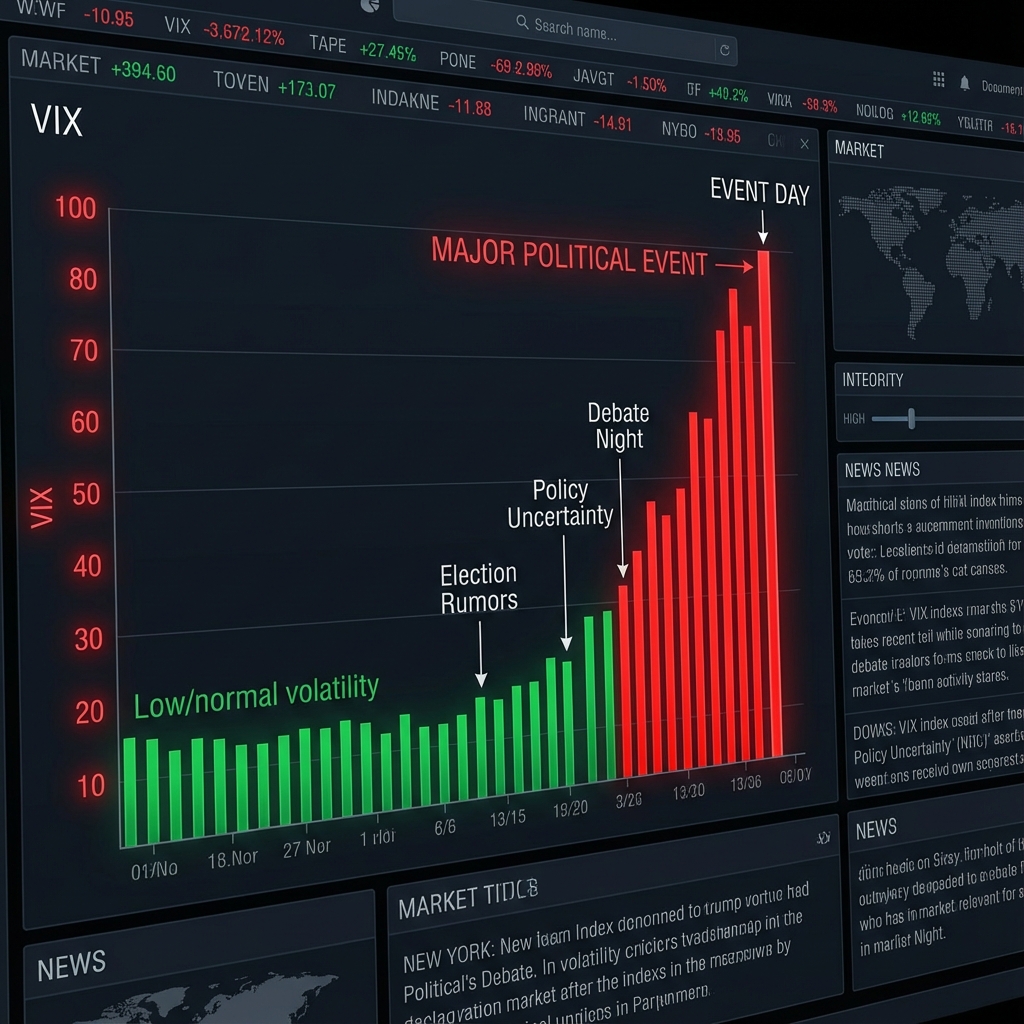
Political Uncertainty: The Election Cycle
Elections and geopolitical tensions are known drivers of volatility. Markets hate uncertainty more than bad news.
The "VIX Spike" Phenomenon
Our analysis shows that the VIX index (the "fear gauge") tends to spike an average of 15% in the month leading up to a US presidential election.
- Pre-Election Drift: Equities often drift sideways or lower as investors hedge portfolios.
- Post-Election Relief: Once the winner is declared (regardless of party), we often see a "relief rally" as uncertainty evaporates.
Weather Patterns & Commodities
Agricultural commodities are directly impacted by weather, but the ripple effects go further.
- El Niño Effects: We tracked how El Niño years correlate with spikes in Wheat and Coffee futures.
- Energy Demand: Unusually cold winters in Europe drive up Natural Gas prices, which in turn impacts the profitability of energy-intensive industries like Aluminum smelting.
- Insurance Stocks: A severe hurricane season can depress the stock prices of major insurers due to anticipated catastrophe claims.
Social Sentiment: The "Meme" Factor
With the rise of social media, "sentiment analysis" has become a viable trading signal.
- Keyword Velocity: We track the velocity of specific tickers (e.g., $GME, $TSLA) on platforms like X (formerly Twitter) and Reddit.
- The "Inverse Cramer" Effect: We backtested a strategy that fades extreme retail sentiment. When retail euphoria hits a fever pitch (99th percentile), a short position often yields positive alpha over a 1-week horizon.
Conclusion
Global events provide the context in which price action occurs. Ignoring them is like trying to sail without checking the weather forecast.